Worm burden in horse manure, risks, life cycle, and practical management
Managing horse manure is an essential part of maintaining healthy horses and productive pasture. One often overlooked factor is its role in parasite transmission. While internal worm burdens are widely recognised, manure itself can contribute to ongoing environmental contamination if not managed effectively.
Understanding the parasite life cycle, and how management practices influence it, is key to reducing exposure risk.
What is a worm burden?
Worm burden refers to the number of parasitic worms living within a horse. These parasites produce eggs that are passed out in faeces and enter the surrounding environment.
Once in pasture systems, these eggs may develop further depending on parasite species and environmental conditions.
How parasites survive in the environment
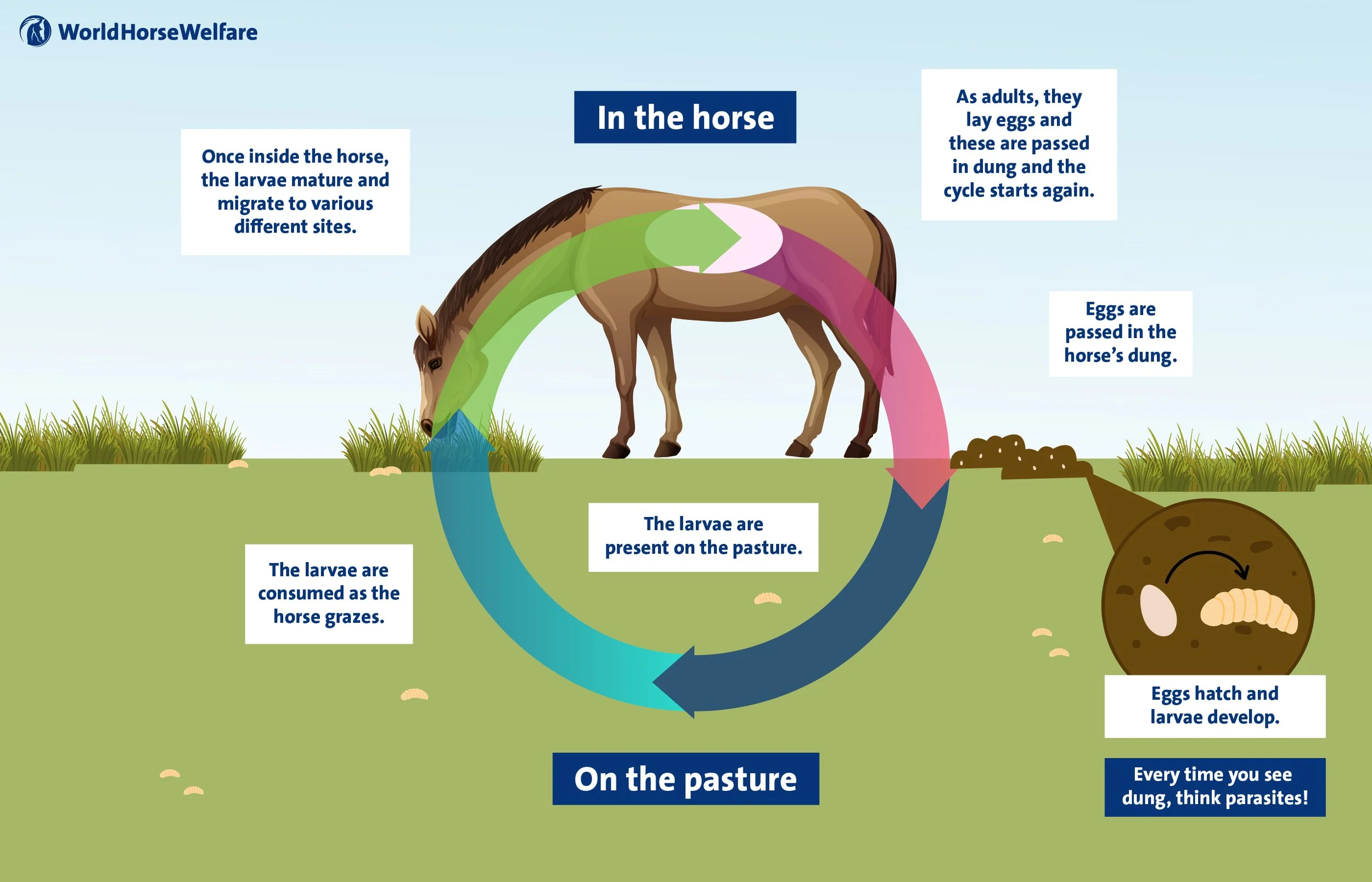
Many equine gastrointestinal parasites, particularly strongyles, have a direct life cycle:
Eggs are passed in faeces
Larvae develop under suitable conditions such as moisture, oxygen, and temperature
Infective larvae can move short distances from manure onto surrounding herbage
Horses ingest larvae while grazing, continuing the cycle
Survival and development rates vary depending on weather, pasture conditions, and stocking density.
Why this matters
Environmental contamination can contribute to parasite exposure in grazing horses. Infected horses may show:
Weight loss or poor body condition
Reduced coat quality
Digestive upset
Reduced performance in more severe cases
A key challenge is that reinfection can occur continuously if pasture contamination is not managed.
The role of manure and pasture management
Manure left on pasture can act as a localised source of parasite eggs and larvae. Effective management reduces the opportunity for development and spread.
Key strategies include:
Regular removal of faeces from grazing areas
Rotational grazing to reduce parasite exposure
Avoiding overstocking, which increases contamination pressure
Resting pasture where possible to reduce larval survival
These measures are widely recognised as effective components of integrated parasite control programmes.
Composting and manure treatment
Manure treatment can help reduce environmental parasite pressure, but outcomes depend on the method used.
In traditional composting systems, temperature, oxygen, and moisture levels vary considerably. Where compost is well managed and reaches sufficient biological activity, breakdown of organic matter is accelerated and pathogen survival is reduced. However, poorly managed heaps may not achieve consistent conditions.
An alternative approach used in regenerative systems is controlled fermentation, Bokashi style processing. This process uses beneficial microorganisms to rapidly stabilise organic material in low oxygen conditions.
During fermentation:
Organic matter is rapidly acidified
Putrefaction is reduced
Nutrient loss and odour are minimised
Microbial activity shifts toward beneficial communities
This process focuses on stabilisation of organic matter rather than relying on heat generation.
While fermentation supports rapid and controlled breakdown, it should be considered part of a wider manure and pasture management system rather than a standalone parasite control method.
Reducing reliance on chemical wormers
Chemical anthelmintics remain an important part of equine parasite control. However, increasing resistance in parasite populations is a recognised concern.
Best practice now emphasises targeted treatment strategies supported by environmental management, including:
Faecal egg count monitoring
Strategic, rather than routine worming
Pasture hygiene and rotation
Stocking density management
Environmental control helps reduce the overall parasite challenge, supporting more sustainable use of wormers.
Practical steps to reduce parasite exposure
To support effective parasite management:
Remove manure from paddocks regularly
Avoid spreading untreated manure on grazing land
Use appropriate manure treatment systems, composting or fermentation
Rotate grazing areas where possible
Monitor parasite levels through faecal egg counts
Consistency across these measures is key to reducing pasture contamination.
Summary
Worm burden in horses is influenced not only by internal parasite load but also by environmental exposure through pasture contamination. Manure management plays an important role in reducing this risk.
While no single method eliminates parasites entirely, integrated approaches combining grazing management, monitoring, and appropriate manure treatment can significantly reduce exposure pressure.
Controlled fermentation systems offer a biologically active way to stabilise manure and support broader hygiene and nutrient cycling within the farm system. When used alongside established parasite control practices, they contribute to a more balanced and sustainable approach to equine management.