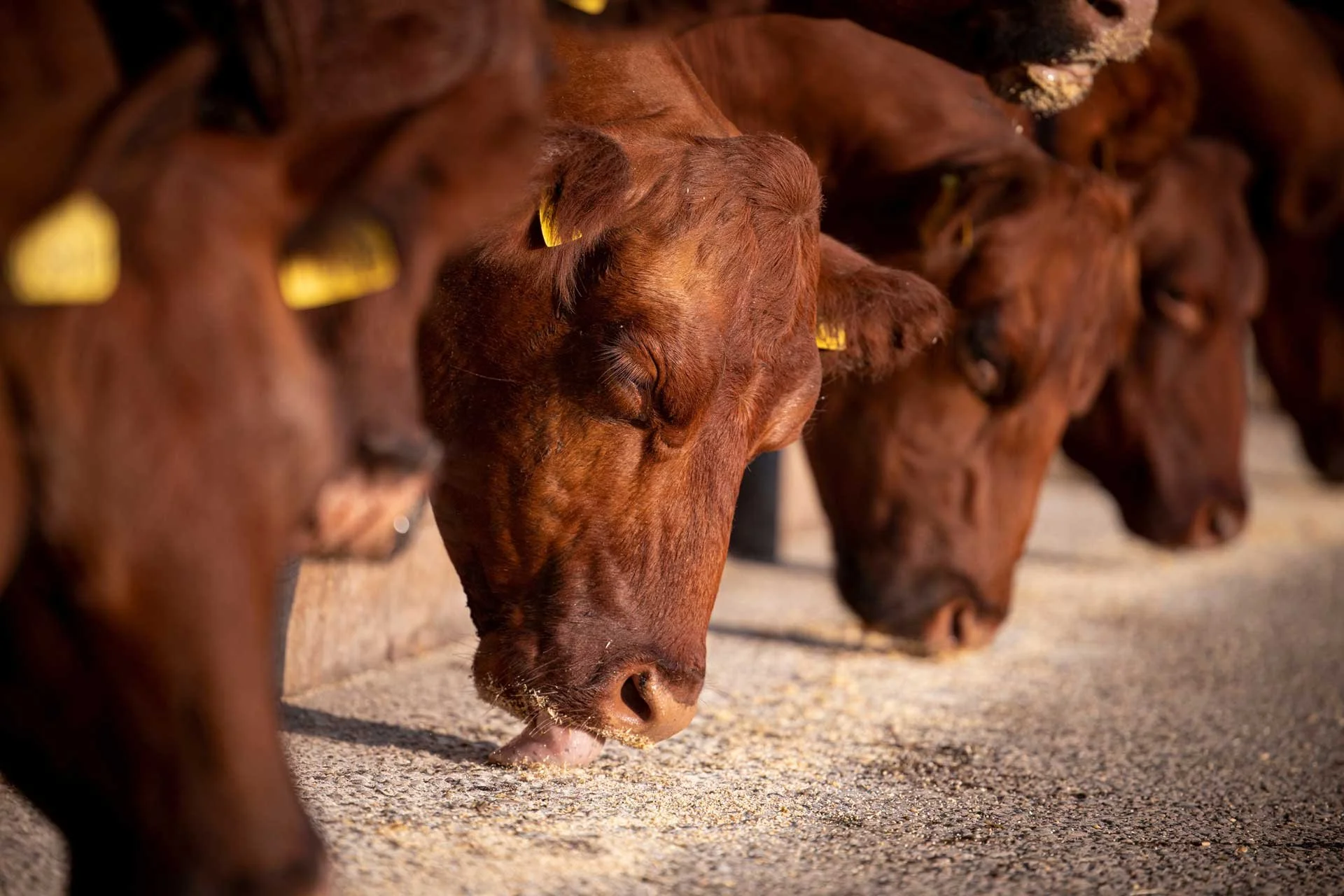
Typical feeding rates for Ostrea Oyster Shell Flour
Lactating cows, housed - 100 g per head per day
Lactating cows, grazing - 80 g per head per day
Calves and youngstock - 50 g per head per day
Beef cattle-50 g per head per day
Steadier rumen pH. More value from the ration you’re already feeding.
Ostrea is a natural oyster shell flour used as a rumen buffer in dairy and beef cattle diets. Its porous shell structure provides a large surface area for sustained buffering, helping support a more consistent rumen environment when diets place greater acid pressure on the cow. It also supplies calcium as part of the ration.
High-concentrate diets, rapidly fermentable starch, wet silage, and changes in feeding can all make it harder to keep rumen pH steady. Ostrea gives farmers and nutritionists another way to support rumen function without adding sodium bicarbonate to the diet. It is made from naturally occurring oyster shell deposits in the North Sea, processed and ground into a fine flour for mixing into feed.
Why use Ostrea?
Helps buffer acidity and support steadier rumen pH, preventing acidosis
Offers sustained action through its porous oyster shell structure.
Only buffers the cattle that need it.
Provides a source of calcium within the ration, not Sodium bicarbonate.
Can be mixed into diets for housed or grazing cattle.
Lactating cows, housed - 100 g per head per day
Lactating cows, grazing - 80 g per head per day
Calves and youngstock - 50 g per head per day
Beef cattle-50 g per head per day