
Tesco’s food waste-to-animal feed model: a regenerative perspective.
Introduction: what Tesco and RenEco are piloting
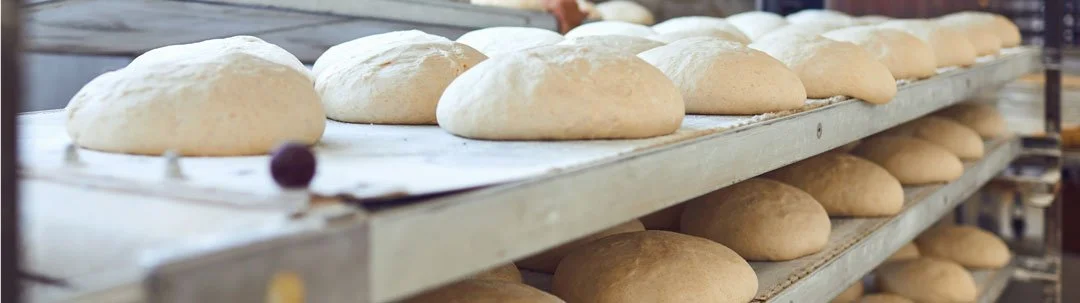
Tesco has partnered with food waste recycling company RenEco to pilot a large-scale system that converts surplus food from its supermarkets and manufacturing sites into animal feed. Instead of sending unsold bakery items and fresh produce to waste, the material is collected, transported to a central facility in Northamptonshire, processed, de-packaged where necessary, and reformulated into livestock feed.
The finished feed is then intended to be supplied back into the farming supply chain, primarily to farmers who supply Tesco. The facility is designed to handle up to 1,000 tonnes of surplus food per week and is powered by renewable energy, forming part of Tesco’s wider ambition to reduce food waste and increase circularity within its supply chain.
While this model is being presented as a circular economy solution, it raises important questions when viewed through a regenerative farming lens.
Circular economy thinking vs regenerative outcomes
From a regenerative farming perspective, this system represents an improvement on linear waste disposal. Diverting edible surplus away from landfill or low-value processing routes helps reduce waste, recover embedded nutrients, and lower emissions associated with disposal.
However, circularity is not the same as regeneration.
This model remains firmly within an industrial efficiency framework, where surplus is generated at scale and then reprocessed centrally. It improves flow management within the existing system, but it does not fundamentally change how that system creates surplus in the first place.
Regenerative farming asks a deeper question: does the system improve ecological function, particularly soil health, or does it simply optimise logistics?
The structural limitation: surplus is still being designed into the system
A key issue is that this approach depends on a highly centralised food system where overproduction and surplus are inevitable at scale.
Even when efficiently recovered, surplus food represents a failure of alignment between production, distribution, and demand. In regenerative systems, the priority is reducing surplus at source through:
more localised production and distribution
diversified cropping systems
better seasonal alignment
reduced reliance on long, linear supply chains
Without this shift, surplus recovery systems can unintentionally normalise inefficiency rather than eliminate it.
Livestock feed recycling: useful, but still an external loop

Converting surplus food into animal feed does recover value, but it still reinforces a livestock system dependent on external inputs.
While it may reduce pressure on primary feed crops such as imported soy, it does not fundamentally change stocking density, system resilience, or nutrient cycling at farm level.
In other words, nutrients are being redirected through animals rather than being returned directly to soils.
From a regenerative standpoint, this is still a one-step removed cycle.
Soil-first thinking: where regenerative systems diverge
The most significant gap in this model is that nutrients are not being prioritised for direct soil return.
In regenerative agriculture, soil is the foundation of the system. Nutrient cycling should therefore prioritise soil biology first, not feed conversion efficiency.
This is where Bokashi offers a fundamentally different approach.
Bokashi: a soil-led alternative to waste diversion
Bokashi fermentation works by using Effective Microorganisms (EM) to ferment organic material in a controlled, anaerobic process. Rather than breaking waste down through high-energy industrial processing or routing it through livestock systems, Bokashi stabilises nutrients and preserves their biological value.
Key benefits in a regenerative context include:
rapid fermentation of organic matter without high energy input
reduced nutrient loss compared to aerobic decomposition
improved soil microbial activity when applied to land
direct return of organic matter to soil systems
decentralised, on-farm or local processing potential
Unlike centralised feed conversion systems, Bokashi supports a shorter, soil-first loop where nutrients are returned directly to the biological engine of agriculture.
Energy, scale, and system design
Although the RenEco facility is powered by renewable energy and designed to optimise logistics, it still relies on a national-scale infrastructure of collection, transport, de-packaging, and redistribution.
Regenerative systems generally move in the opposite direction:
smaller scale
lower energy input
fewer processing steps
closer alignment between waste generation and reuse
on-farm or community-level integration
The difference is not just environmental impact, but system design philosophy.
Conclusion: a useful step, but not a regenerative endpoint
Tesco and RenEco’s initiative represents a meaningful improvement within the existing food system. It reduces waste, recovers value, and signals a shift towards more circular thinking in large-scale retail supply chains.
However, from a regenerative farming perspective, it remains a transitional solution.
True regeneration requires moving beyond waste recovery towards system redesign, where surplus is minimised, nutrients are stabilised at source, and soil health is the primary measure of success.
In that context, Bokashi is not simply an alternative waste pathway. It represents a fundamentally different approach: one that places soil, biology, and decentralised nutrient cycling at the centre of the system, rather than industrial processing efficiency.