Is water the most overlooked nutrient on a dairy farm?
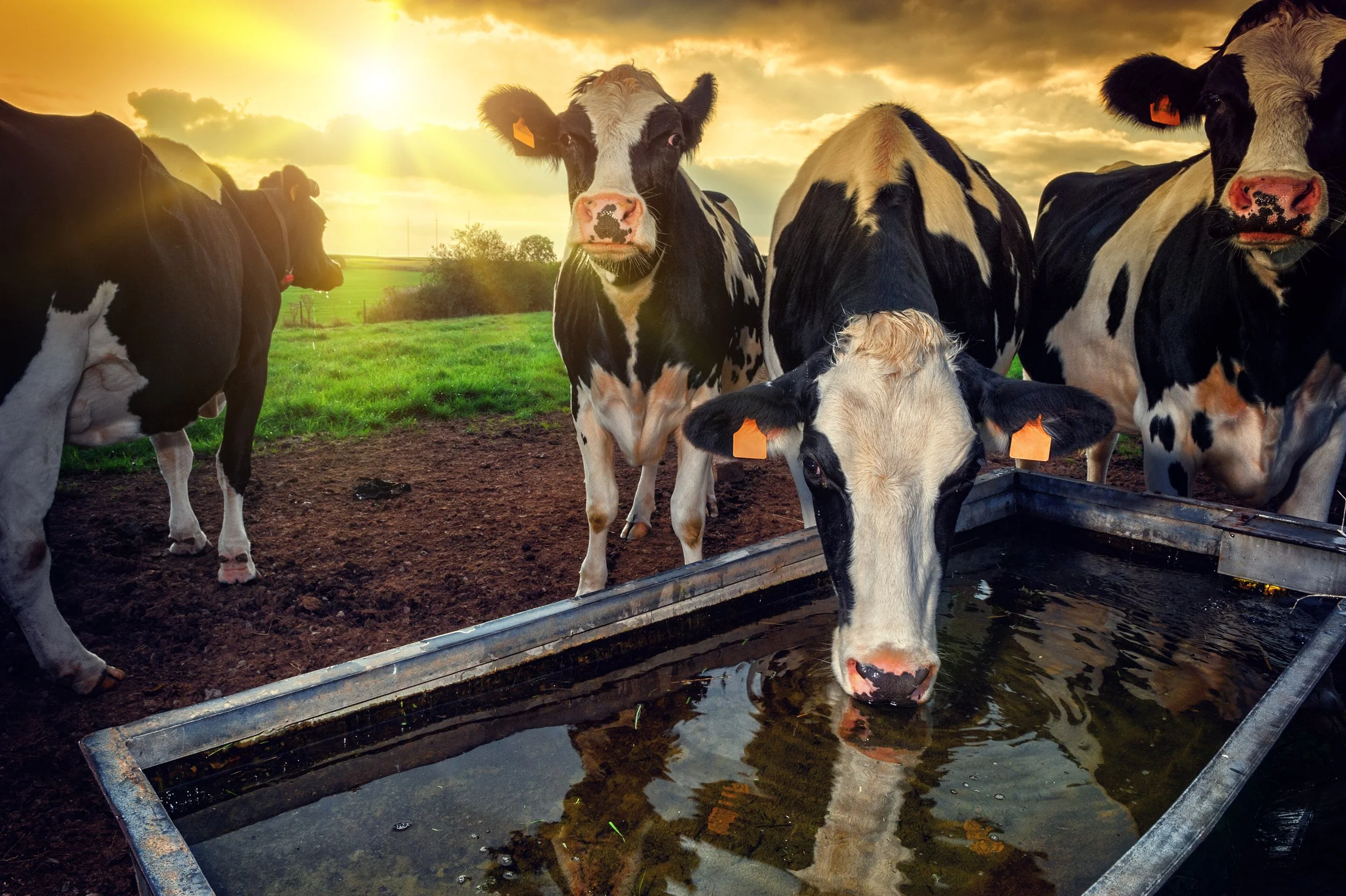
Looking after their water is vitally important
Clean water is one of the cheapest inputs on a dairy farm. But it is often the most poorly managed.
If cows do not drink enough water, milk yield drops, rumen function suffers and herd health can decline — often without farmers realising the root cause.
Water should be treated as a core nutrient, not just a utility.
Recent discussion in the farming press has highlighted how poor water management can limit dairy herd performance and profitability.
🔗 Farmers Weekly – Why poor water management limits dairy herd potential
https://www.fwi.co.uk/livestock/livestock-feed-nutrition/why-poor-water-management-limits-dairy-her…
How much water should a dairy cow drink per day?
One of the most common questions farmers ask is:
How much water should a dairy cow drink daily?
The answer depends on several factors:
Milk yield
Dry matter intake
Ambient temperature
Diet composition
Stage of lactation
Guidance used across the UK dairy sector suggests that a cow producing around 30 litres of milk per day in warm conditions (above 20 °C) may require approximately 90–100 litres of water per day.
This is not surprising when you consider that milk itself is roughly 87 % water.
🔗 AHDB Dairy – Water requirements for dairy cattle
https://ahdb.org.uk/knowledge-library/water-requirements-for-dairy-cattle
If cows cannot drink enough to support this demand, production will suffer.
Why water intake matters for milk production
Water supports far more than just milk output.
Adequate hydration is essential for:
Rumen function
Nutrient transport
Thermoregulation
Waste removal and metabolism
When cows drink less than they need, several problems can occur:
Reduced dry matter intake
Poor rumen fermentation
Higher risk of acidosis
Increased stress and competition at troughs
In short:
You cannot maximise milk production if water intake is limited.
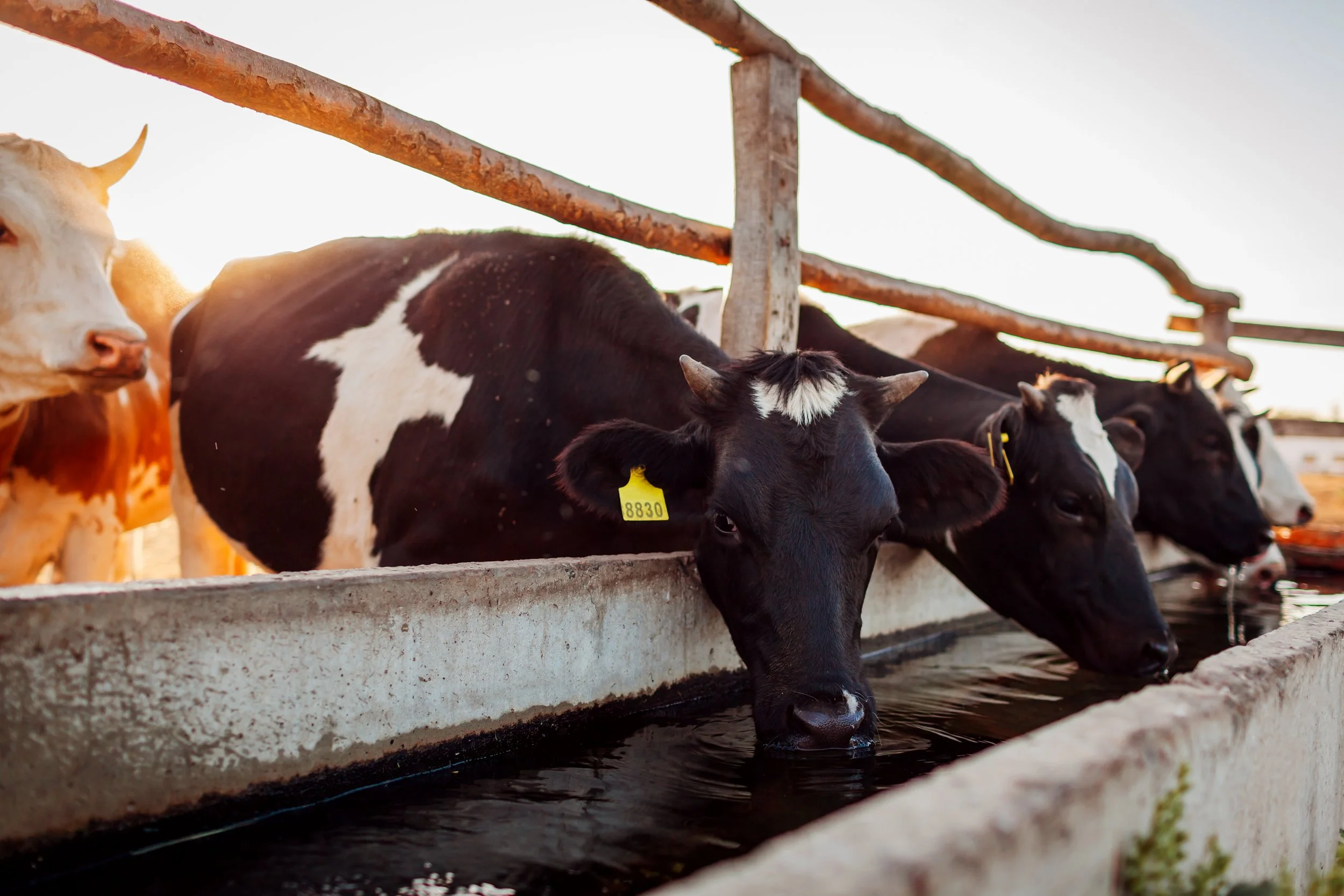
What water quality should dairy cows have?
Water quality is just as important as water quantity.
Industry guidance suggests Total Bacterial Counts (TBC) in livestock drinking water should remain low.
Some welfare schemes recommend counts of below 15 colony forming units (CFU) per 100 ml for adult cattle.
🔗 RSPCA Assured Dairy Standards
https://www.rspcaassured.org.uk/farm-animal-welfare/standards/dairy-cattle/
However, studies of farm water troughs often find:
High coliform counts
Presence of E. coli
Biofilm build-up
This contamination can affect palatability, meaning cows simply drink less.
Water troughs can also act as a reservoir for pathogens, increasing disease risk across the herd.
How poor water access costs dairy farms money
Even small restrictions in water intake can quickly affect milk yield.
Research has shown that restricting cows to 50 % of voluntary water intake for several days can dramatically reduce milk production.
🔗 National Research Council – Nutrient Requirements of Dairy Cattle
https://nap.nationalacademies.org/catalog/9825/nutrient-requirements-of-dairy-cattle
Even smaller restrictions matter.
A 10 % drop in milk yield for a cow producing 30 litres per day means:
3 litres lost daily
At a milk price of 32 p per litre, that equals:
£0.96 per cow per day
Across a 305-day lactation, that becomes roughly:
£292 per cow in lost production potential.
Multiply that across a herd and water management quickly becomes a serious economic issue.
Why some dairy cows don’t drink enough water
Low water intake is often caused by practical on-farm factors such as:
Dirty troughs
Biofilm build-up
Insufficient trough space
Poor water flow rates
Competition within the herd
If cows must queue for water, or the water smells unpleasant, intake drops quickly.
How to improve water intake on dairy farms
Improving water intake usually comes down to good management.
Key areas to review include:
Cleanliness: Regularly cleaning troughs prevents biofilm formation and bacterial growth.
Trough Access: Ensure enough trough space so cows can drink without competition.
Water Flow: Trough refill rates should keep up with herd demand.
Palatability: Clean, fresh water encourages voluntary intake.
The simple rule: you can’t manage what you don’t measure
Many farms measure:
Milk yield
Feed intake
Fertility
But water consumption is rarely monitored.
Yet it is one of the most important drivers of production.
Tracking water usage at herd level can quickly reveal problems in:
supply systems
hygiene
drinking behaviour
Water Is the most undervalued nutrient in dairy production
Feed quality, ration balance and cow comfort are rightly priorities on modern dairy farms.
But none of those systems work properly without adequate water intake.
If cows cannot access clean, fresh, palatable water whenever they want it, production potential will always be limited.
Sometimes the simplest input on the farm has the biggest impact.
L Peddle
Sources
Farmers Weekly
https://www.fwi.co.uk/livestock/livestock-feed-nutrition/why-poor-water-management-limits-dairy-her…
AHDB Dairy
https://ahdb.org.uk/knowledge-library/water-requirements-for-dairy-cattle
RSPCA Assured Dairy Standards
https://www.rspcaassured.org.uk/farm-animal-welfare/standards/dairy-cattle/
National Research Council – Nutrient Requirements of Dairy Cattle
https://nap.nationalacademies.org/catalog/9825/nutrient-requirements-of-dairy-cattle