
Financial pressure in farming: why the current system is no longer sustainable
Introduction: the squeeze is no longer temporary
There is a growing tendency to describe rising input costs and low farmgate returns as “a difficult period” in agriculture. In reality, what farmers are experiencing is not a short-term fluctuation but a structural imbalance in the way modern farming operates.
Fuel and fertiliser costs continue to rise, while commodity prices fail to reflect the true cost of production. For many small and family farms, this is not just pressure, it is erosion of viability.
The question is no longer whether the system is under strain, but how long it can realistically continue in its current form.
Input dependency is the core vulnerability
Modern farming has become heavily dependent on external inputs. Fertiliser, fuel, feed, and crop protection products now form the backbone of productivity in many systems.
The problem is not the use of these inputs themselves, but the level of dependency they create. When global energy prices shift or supply chains tighten, farm businesses have very little control over their cost base.
Fertiliser volatility is a clear example. It is tied directly to energy markets and geopolitics, meaning farmers are exposed to forces far beyond their control. Fuel costs add another layer of instability across every stage of production.
This level of exposure is not resilience, it is reliance.
Low returns expose a broken cost balance
At the same time, farmgate prices have not kept pace with rising production costs. In many cases, farmers are expected to absorb volatility without corresponding increases in income.
This creates a fundamental imbalance: rising costs on one side, stagnant returns on the other.
For commodity producers, this is especially damaging. Even efficient, high-performing farms are finding that efficiency alone is no longer enough to protect margins.
The reality is that productivity gains are being outpaced by input inflation.
Small and family farms are carrying the greatest risk

While all farms are affected, small and family-run businesses are carrying the greatest burden. These operations often lack the financial buffer or scale advantages needed to absorb prolonged cost increases.
The result is a familiar and increasingly concerning pattern:
reduced investment in long-term improvements
greater reliance on debt or secondary income
delayed succession planning decisions
growing uncertainty about future viability
This is not just an economic issue; it is a structural one that affects the fabric of rural communities and food production diversity.
Efficiency alone is not enough anymore
For years, the dominant response to financial pressure has been efficiency: produce more, waste less, optimise inputs.
But efficiency has limits when the underlying system is structurally expensive. There comes a point where doing “more with less” still does not close the gap between cost and return.
At that stage, the question shifts from efficiency to dependency. How much of a farm’s cost base is controlled internally versus dictated externally?
Without addressing that imbalance, farms remain vulnerable regardless of how efficient they become.
A need to rethink farming resilience
Resilience in farming is often discussed in terms of weather or disease risk, but financial resilience is just as critical.
That means reducing exposure to volatile external inputs where possible and rebuilding more stable internal cycles of production.
This is where soil health, nutrient efficiency, and biological systems become economically relevant, not just environmentally desirable. Improving how nutrients are retained and cycled on farm directly affects long-term input requirements.
It is not about replacing conventional systems overnight, but about questioning long-term dependency levels that no longer make economic sense.
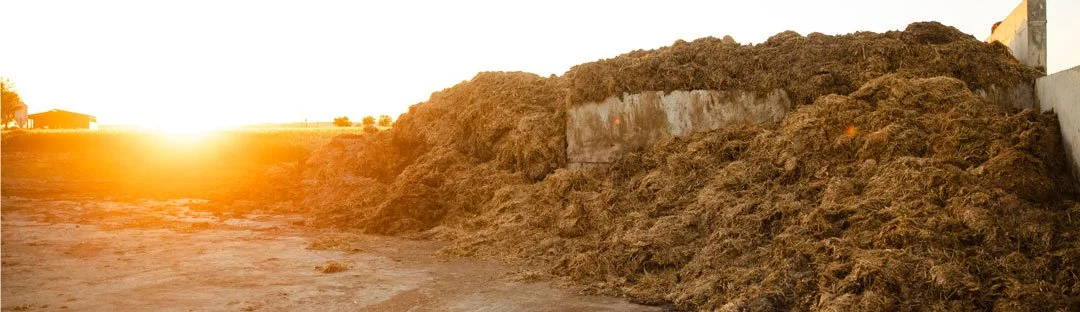
Agriton perspective: shifting from input reliance to system strength
From an Agriton perspective, the key issue is not simply the cost of inputs, but the structural reliance on them.
When farms rely heavily on external fertiliser and feed inputs, they inherit external volatility. When more value is retained within the farm system through improved biological activity and resource cycling, that exposure can be reduced over time.
This is where approaches that support soil biology and on-farm nutrient transformation become relevant. Not as a replacement for farming practice, but as a way of rebuilding internal system strength and reducing cost vulnerability.
The goal is not ideological change, but economic stability.
Conclusion: the system needs adjustment, not adjustment at the edges
The financial pressure facing UK agriculture is not a temporary disruption. It is a clear signal that the current cost structure of farming is misaligned with the returns it generates.
Small and family farms are feeling this first, but the implications extend across the entire sector.
The long-term question is no longer how to cut costs slightly or increase efficiency marginally. The question is whether farming systems can be redesigned to reduce dependency, stabilise input requirements, and restore economic balance.
Without that shift, financial pressure will remain a permanent feature rather than a passing phase.