
Buffering Agents in Dairy Nutrition: Managing SARA in High-Yielding cows
Subacute Ruminal Acidosis (SARA) in Dairy Cattle
Subacute ruminal acidosis (SARA) is a common metabolic disorder, prevalent in high-yielding dairy cows, characterised by prolonged periods of lower pH < 5.6 within the rumen (Elmhadi et al., 2022).
The condition is associated with diets high in fermentable sugars such as concentrates with a lower inclusion of effective fibre (Wang et al., 2023; Wang et al., 2024).
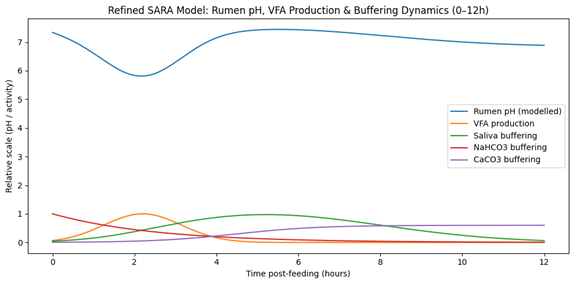
Under normal conditions, the pH is maintained within an optimal range approximately 5.8 to 6.8 (Shen et al., 2019). However, when digestible fibre content falls below 25% combined with rapid fermentable carbohydrate intake excessive of 50%, the accumulation of VFAs causes a sustained drop in pH below 5.8 (Kovaks et al., 2020; Srivastava et al., 2021), resulting in impaired rumen function, feed efficiency and productivity (Christodoulopoulos, G. 2025).
Unlike acute ruminal acidosis, SARA does not often display clinical signs of disease (Voulgarakis et al., 2024) and does not present a sudden drop in pH, but rather involves a persistent reduction in pH which can last for several weeks, making diagnosis challenging and treatment often occurs once health has been compromised.
Pathogenesis of Ruminal Acidosis
Schematic representation of the proposed pathogenesis of ruminal acidosis based on current understanding.
Dietary Factors and Prevention of SARA
Diet can play a key role in management and prevention of SARA within herds. Separate feeding of concentrates or inadequate forage can encourage ration sorting behaviours, and predispose cows to SARA (Kleen and Cannizzo, 2012).
In current practice, industry recommends particle size of 2.5 – 5 cm as an optimal length, promoting rumination and secretion of saliva – both essential for buffering the rumen.
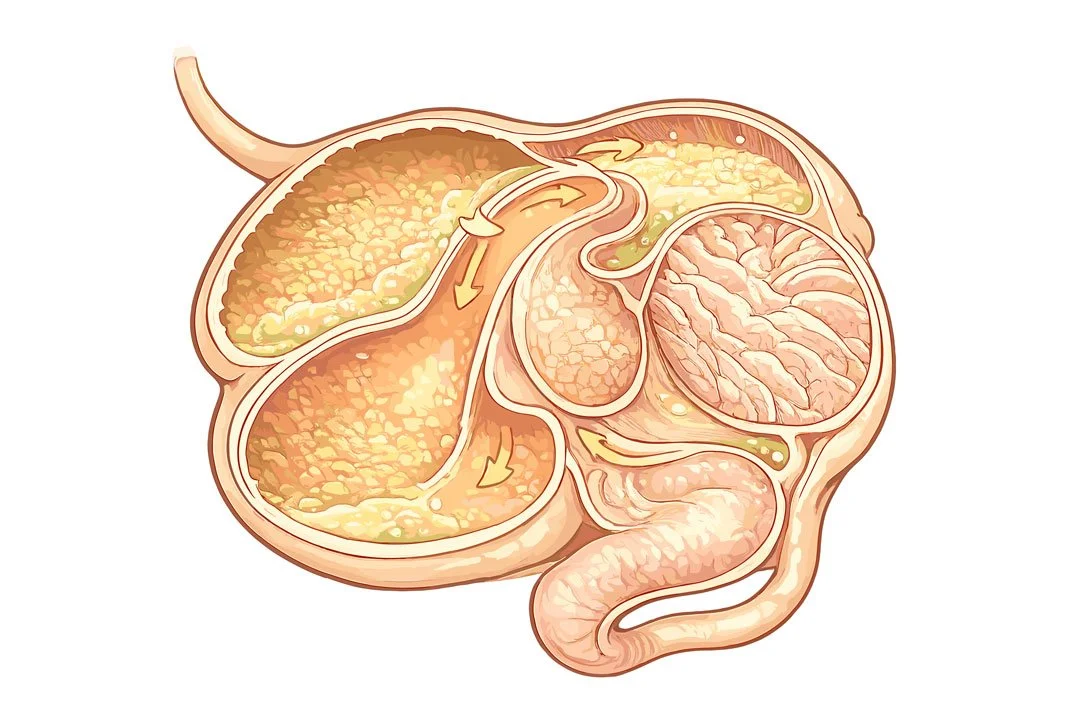
Rumen pH is essential for maintaining healthy fermentation and microbial activity, with stability within the optimal range being critical for efficient digestion, animal health, and productivity.
A large portion of the dry matter intake (DMI) should consist of physically effective NDF which contributes to the stimulation of chewing and saliva production, and forms part of the floating mat of large particles within the rumen (White et al., 2017).
Due to minimal clinical signs, diagnosis is difficult. Often farmers observe mild diarrhoea and colour changes, with signs of foam (Abdela, 2016) due to rapid passage of digesta into the intestines with continued fermentation beyond the rumen.
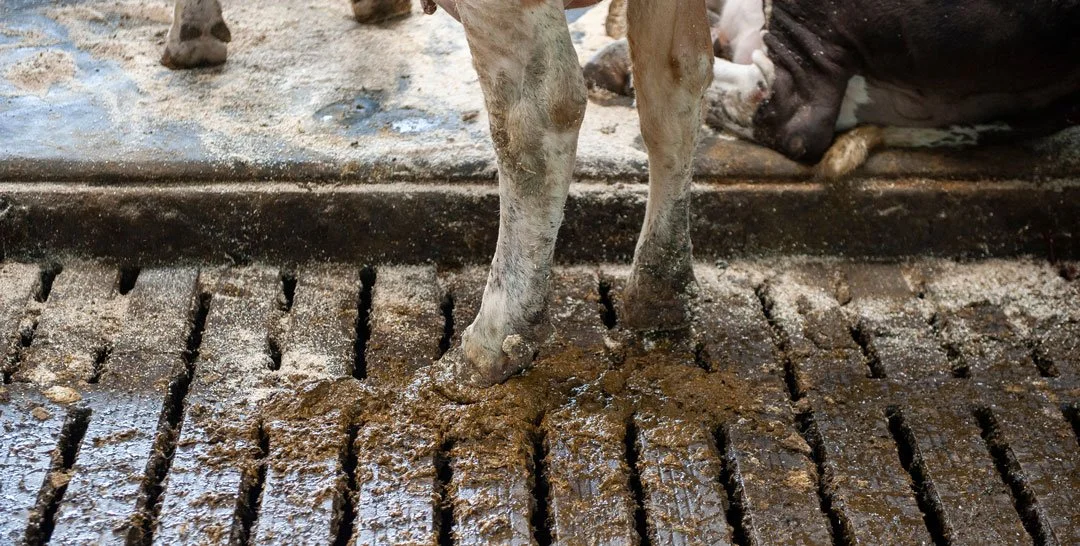
Other non-specific signs include milk fat depression (Abdela, 2016) due to reduced pH impacting normal fermentation and decreasing acetate production. This fat depression can result in economic losses for dairy farmers.

Some suggest a milk fat percentage below 2.5% in at least 10% of cows in a Holstein herd could be indicative of SARA (Nordlund, 2004).
Buffers in Ruminant Nutrition
Supplementing buffers into rations has been widely adopted to prevent and mitigate the impact of ruminal acidosis. Commonly used buffers include sodium bicarbonate, magnesium oxide, potassium, and calcium carbonate – all help to stabilise the rumen pH environment and prevent acid build-up from accumulation of VFAs.
Sodium bicarbonate (Na2CO3) has been used since the 1960s, promoting ruminal function and decreasing volumes of lactic acid (Mao et al., 2017). Carbonate buffers are the most utilised agents within diets to balance pH and are designed to neutralise excessive hydrogen ions (H⁺) generated during fermentation. Effectiveness can depend on buffer type, dosage and solubility.
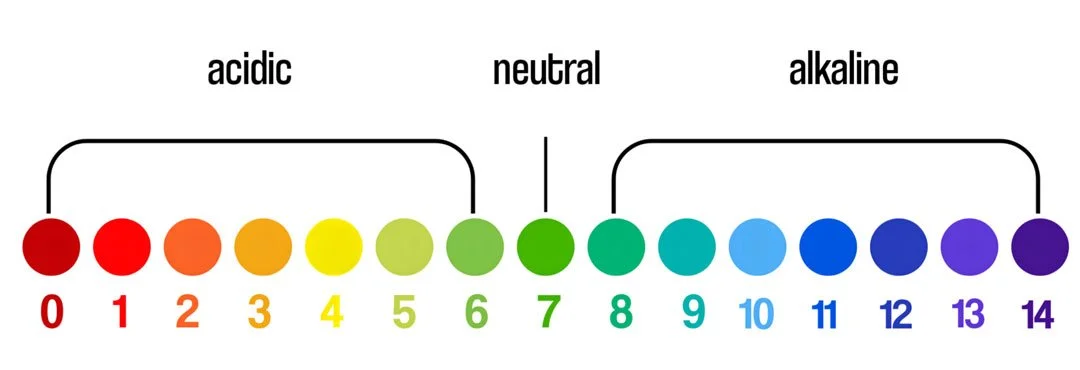
Sodium bicarbonate (NaHCO₃) is widely used to stabilise rumen pH. Its buffering action is effective because it operates within the rumen’s natural pH range, helping maintain a stable environment for microbial fermentation and supporting animal performance (Ramos et al., 2021). It is also highly soluble, allowing it to react quickly in the rumen fluid, which contrasts with less soluble buffers such as calcium carbonate that act more slowly due to limited dissolution.
Calcium carbonate readily dissolves within the rumen in the presence of dissolved carbon dioxide and under acidic conditions, making it an effective strategy in mitigating acidosis. Due to being less soluble than sodium bicarbonate, it can offer a more prolonged and sustained effect over time, and its effectiveness is dependent on rumen acidity levels, making it appear more “self-regulating”. Its reactivity increases when pH drops below approximately 5.5–6.0 but it cannot rapidly support pH recovery during sharp declines. Therefore, it does not directly contribute during a pH crash but supports stabilisation during recovery.
Summary
Buffers play a key role in stabilising rumen pH and supporting dairy cow performance, with different buffer types providing either rapid or sustained effects depending on their properties.
L Peddle
Reference List
Abdela N (2016) Sub-acute ruminal acidosis (SARA) and its consequence in dairy cattle: a review of past and recent research at global prospective. Achievements Life Sci 10:187–196. 10.1016/j.als.2016.11.006
Christodoulopoulos G. (2025). Subacute ruminal acidosis in cattle: A critical review of clinical management. Vet Res Commun. 2025 Aug 6;49(5):273. doi: 10.1007/s11259-025-10842-5. PMID: 40768058; PMCID: PMC12328524.
Elmhadi, M.E., Ali, D.K., Khogali, M.K., Wang, H., 2022. Subacute ruminal acidosis
enteric methane emission in ruminants?. Sci. Total Environ. 855, 158867.
flora of lactating Holstein dairy cows. Animals. 1, 2522.
high-grain diet on performance, ruminal fermentation, and rumen microbial
in dairy herds: Microbiological and nutritional causes, consequences, and
Kleen JL, Cannizzo C (2012) Incidence, prevalence and impact of SARA in dairy herds. Anim Feed Sci Technol 172:4–8. 10.1016/j.anifeedsci.2011.12.003
Nordlund KV (2004) Investigation strategies for laminitis problem herds. J Dairy Sci 87:27–35. 10.3168/jds.S0022-0302(04)70058-2
prevention strategies. Anim. Nutr. 10, 148–155
Shen H, Xu Z, Shen Z, Lu Z (2019) The regulation of ruminal short-chain fatty acids on the functions of rumen barriers. Front Physiol 10:1305. 10.3389/fphys.2019.01305
Voulgarakis N, Gougoulis D, Psalla D, Papakonstantinou G, Katsoulis K, Angelidou-Tsifida M, Athanasiou L, Papatsiros V, Christodoulopoulos G (2024b) Subacute rumen acidosis in Greek dairy sheep: prevalence, impact, and colorimetry management. Animals 14(14):2061. 10.3390/ani14142061